

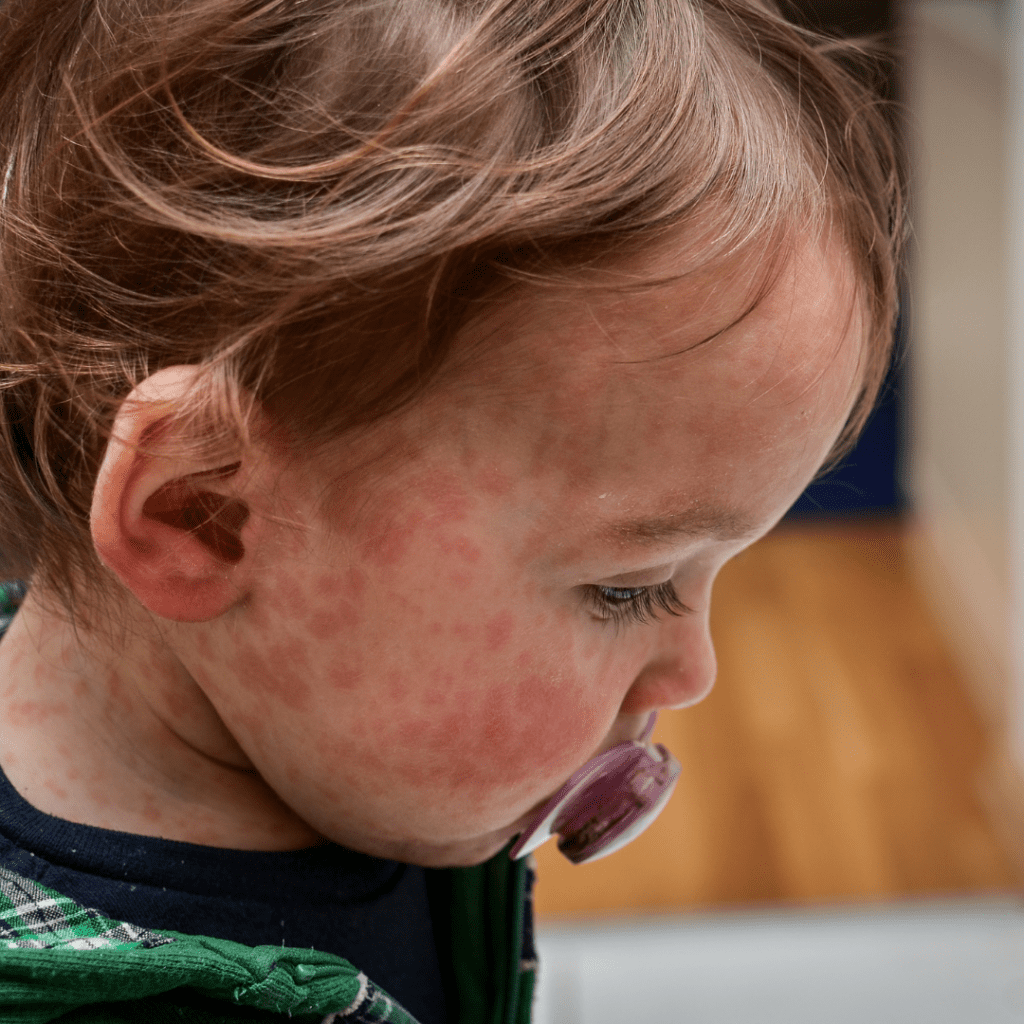
5/20/26 Update – Georgia Department of Public Health Confirms Three New Measles Cases in Metro-Atlanta family
Declining measles vaccination rates can lead to more frequent outbreaks in our communities. The health department wants parents to know that measles is more than just a rash and fever — it can be very dangerous, especially for babies and young children.
Measles is highly contagious.
The virus that causes measles is highly contagious. Just one person can spread measles to 90% of the people they come in contact with. Babies younger than 1 year of age rely on their community to keep them safe from measles.
Measles complications can be serious.
About 1 in 5 unvaccinated people in the U.S. who get measles are hospitalized, and about 1 out of every 20 children with measles gets pneumonia, which is the most common cause of death from measles in young children.
Babies are at the highest risk for serious illness from measles.
Measles symptoms usually begin 7-14 days after infection.
Measles symptoms usually begin 7-14 days after infection. Early symptoms are similar to those of a cold and can worsen over time.
- runny nose
- cough
- red, irritated eyes (conjunctivitis)
- fever
- rash that typically starts on the face and spreads down the body
If you suspect that you or your child may have measles, tell your healthcare provider or the hospital before you arrive at the facility. This allows them to take measures to prevent the virus from spreading to others and to provide you with the best guidance and care.
Vaccination is the best way to prevent measles infection.
The measles, mumps, and rubella (MMR) vaccines are safe and effective and are recommended for those 1 year of age and older.
Nutritional supplements do not prevent measles, and too much can make you or your child sick. Talk with your healthcare provider before using these supplements.
Take extra precautions while traveling.
Measles still circulates worldwide, and most outbreaks start when people return from travel abroad or from areas with ongoing local transmission.
If you are planning travel, ensure that you and your family are protected against measles and other vaccine-preventable diseases. Individuals traveling may need an early dose of the MMR vaccine for infants aged 6–11 months and 2 doses of the MMR (or other measles-containing) vaccine for most children and adults born during or after 1957.
Talk to your provider about all the vaccines you may need before a trip, or learn how a travel vaccine appointment can help you get up to date on recommended vaccines before you travel.
Vaccines are available at the health center.
Vaccines are available at our Centerville, Lawrenceville, Norcross, Newton and Rockdale locations. Walk-in appointments for routine vaccines are available, or you can schedule an appointment by calling 770.904.3717. Travel vaccine appointments must be made in advance.
____________________