

STAY INFORMED
Identify Local Hazards
Learn what natural disasters, severe weather patterns, and emergencies most frequently impact your community.
Use Reliable Information Sources
Sign up for alerts from weather apps and emergency organizations to receive important updates before, during, and after emergencies or natural disasters.
Know Your Options
Evacuating
Designate a location to evacuate to, such as a friend’s home, a hotel, or a pre-designated shelter, and determine how you and your family can reach it safely and what supplies you will need once you arrive.
Sheltering in Place
When sheltering in place, ensure you have an emergency kit before disaster strikes, and stay up to date with news from local authorities.
Public shelters provide disaster survivors with water, food, medicine, and basic sanitary facilities. If you have pets, consider locations that allow pets, as most public shelters only allow service animals.
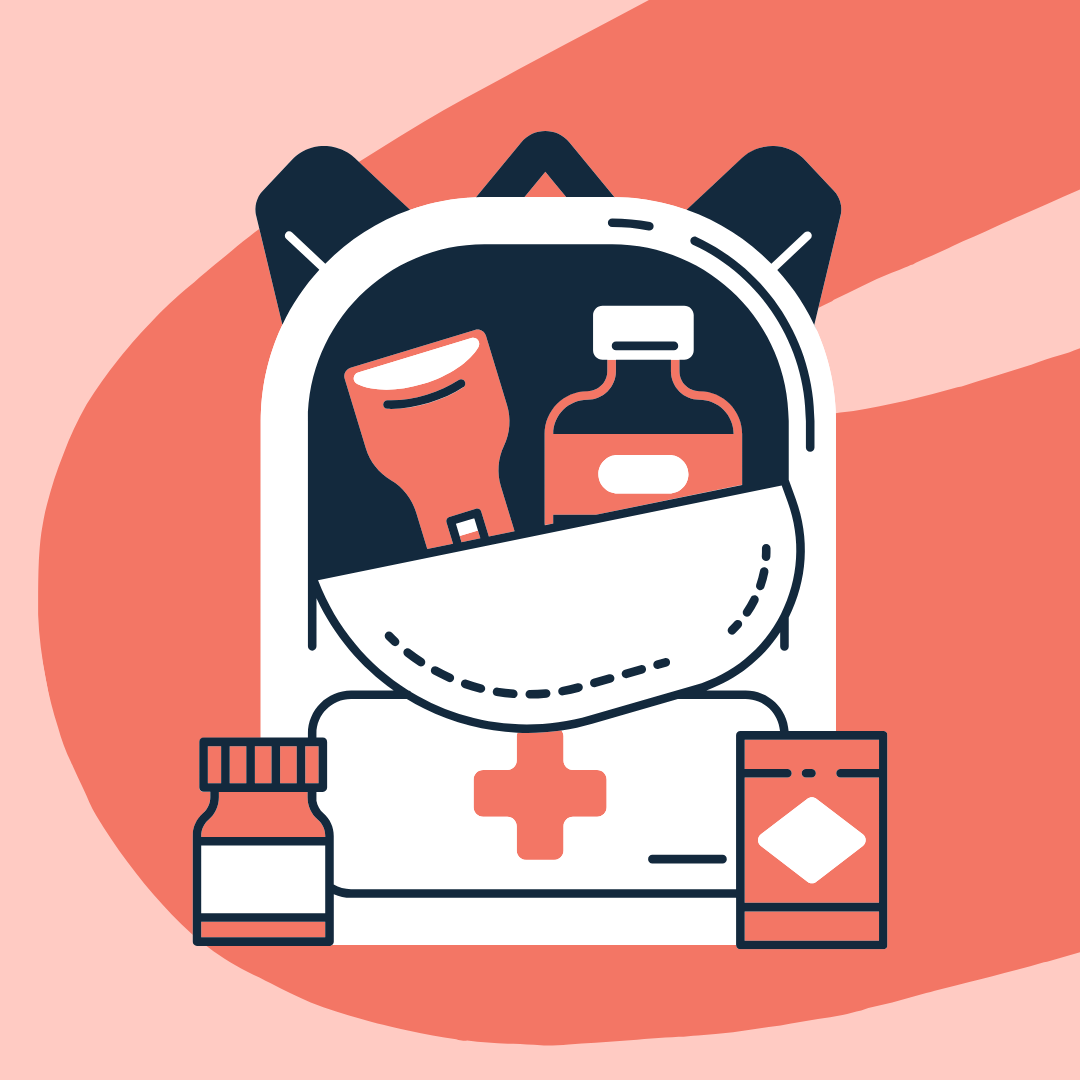
BUILD A KIT
Building a kit ensures that whether you are sheltering in place or evacuating, you have what you need to stay healthy and safe.
Items for your Go Kit or Home Kit
- Water – One gallon per person, per day (for drinking and sanitation).
- Food – A three-day supply of non-perishable, high-energy items such as protein bars, canned goods, and dried fruit, as well as a manual can opener.
- Light & Power – A radio and flashlights, with extra batteries, and a portable power bank for your mobile devices.
- First Aid – Include bandages, antiseptics, and a thermometer.
Clothing & Personal - Hygiene – Bring extra clothing for you and your family. Include travel-sized soap, hand sanitizer, moist towelettes, and garbage bags for personal sanitation.
- Weather Protection – Include a whistle to signal for help and a paper map, in case of GPS failure. Ensure you also have blankets for warmth.
- Important Documents – These can include birth or adoption documents, marriage certificates, passports, driver’s licenses, social security cards or green cards, military service identification, and pet ownership papers and identification tags.
- Custom Items – Based on your household’s unique needs, include additional items such as medications and vitamins, as well as supplies for children, pets, and your elderly or disabled family members.
MAKE A PLAN
Discuss and Consider
Having a plan for how to take action during an emergency allows you to move quickly and confidently.
It’s important to discuss and consider factors unique to your family, such as member ages and languages spoken, that might affect your emergency plan.
In case your family is separated when an emergency strikes, ensure each member knows:
- The shelter or evacuation plan
- The meetup plan and how to contact each other
- How to get alerts and warnings from local authorities
Practice Makes Perfect
Write down your family emergency plan, and ensure each member has a copy. It’s important that you and your family practice the plan together to ensure each member knows what to do in case of an emergency.