The vibe for 2026 is “Healthy!”
Participants! Check your email for a special surprise and keep the vibe going!
Our Healthy Vibes Challenge started in January and ran through February 2026. Stay tuned to our website and social media channels for other challenges.
The Healthy Vibes Challenge is designed to help you make simple-to-implement habit changes that can lead to living a healthier lifestyle! You’ll feel better and reduce your risk of chronic diseases like heart disease and Type 2 diabetes, too!
Challenge participation is 100% free!
The link above goes to a form that is located outside of gnrhealth.com.
We're in Week Five!
Jump to Weekly challenges
Each week features a different “Vibe” or theme for the week. Weekly vibes and tasks are released on Mondays by noon.

Joining the challenge is easy!
Step 1: Sign up.
Step 2: Follow us on social for encouragement and updates!
Instagram @gnrpublichealth
Step 3: Share this page with family and friends so others can learn simple tips that can help improve their health, too!

What can I expect when I sign up?
GNR Public Health is here to help you protect yourself and your future.
We know how difficult it can be to get healthy. Each week, we’ll share easy-to-implement habits that can help you build a healthier you!
There’s a new theme each week that builds on the previous week’s challenge to keep you progressing. The challenges are simple, too! Pick one or two to focus on, and you’ll be on your way to a healthier you in no time.
You can even keep track of your progress by using customized weekly trackers.
The Challenges
We started on January 12, 2026, but it’s not too late to join us. Join the challenge now to get notified when we release the weekly challenges!
Week one Vibe
coming january 12
Why this week's vibe is important
Available on January 12, 2026, by noon.
Challenge Items
Available on January 12, 2026, by noon.
This week's tracker download
Available on January 12, 2026, by noon.
Week one Vibe
Stay Hydrated
Step One: Learn why this week's vibe is important
According to the CDC, getting enough water every day is important for health. Drinking water can prevent dehydration, which may cause unclear thinking, mood change, overheating, constipation, and kidney stones.
Drinking enough water keeps the body hydrated, which helps the heart more easily pump blood through the body. It also helps muscles work efficiently. If you’re well hydrated, your heart doesn’t have to work as hard.
The American Heart Association notes that dehydration means your body doesn’t have enough water, which can make you feel really thirsty and cause other problems such as dizziness, feeling tired, swollen feet, a headache or even life-threatening illnesses, such as heat stroke.
Step Two: Choose your challenges for the week
This week’s challenge will help you learn how to build a consistent hydration routine and understand the importance of daily water consumption.
Daily Action Options
Choose 3–5 to use throughout the week. Can’t do that many? Pick one or two!
Be sure to read “Why it matters” to understand why making these small changes can help make a difference.
- Drink 8 oz. (1 cup) of water right after waking up.
Why it matters: Jump-starts hydration after sleep and boosts alertness. - Track your water intake for one full day using your phone or a tracking bottle.
Why it matters: Awareness increases consistency and prevents dehydration. - Replace one sugary drink with water or flavored water.
Why it matters: Lowers calorie intake and improves metabolic health. - Carry a reusable water bottle all day.
Why it matters: Visual cues encourage more frequent sipping. - Set at least 3 hydration reminders on your phone.
Why it matters: Prompts help build the consistency to form a habit.
Next: Download the Healthy Vibes Week One Tracker below to follow your progress.
Step Three: Track your progress
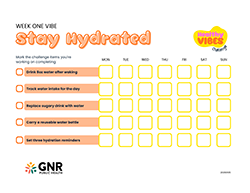
Let’s keep track of how great you’re doing! There’s no need for perfection, just try.
- Download the Week One Tracker
- Mark the challenge items that you want to try.
- When you complete the item for the day, check off the item under the day you completed it.
- When you check a challenge item off, congratulate yourself! You’re on your way to healthier living.
Tips:
Print the tracker on a printer or open the file on your phone or tablet to mark it electronically.
Remember, choose a few items that you think you can complete – there’s no need to try to do them all.
Enlist a friend to do the challenge with you. If you have a hard time doing things like this alone, a friend can help. Ask them to sign up!
Week two Vibe
coming january 19
Step One: Learn why this week's vibe is important
Available on January 19, 2026, by noon.
Step Two: Choose Your Weekly Challenges
Available on January 19, 2026, by noon.
Step Three: Track your progress
Available on January 19, 2026, by noon.
Week two Vibe
Eat healthier
Step One: Learn why this week's vibe is important
The CDC states that there are multiple benefits to eating healthy foods such as fruits and vegetables.
Some of the many benefits include:
- May help you live longer.
- Keeps skin, teeth, and eyes healthy.
- Supports muscles.
- Boosts immunity.
- Strengthens bones.
- Lowers risk of heart disease, type 2 diabetes, and some cancers.
- Supports healthy pregnancies and breastfeeding.
- Helps the digestive system function.
- Helps achieve and maintain a healthy weight.
According to Harvard University, a diet rich in vegetables and fruits can lower blood pressure, reduce the risk of heart disease and stroke, prevent some types of cancer, lower risk of eye and digestive problems, and have a positive effect upon blood sugar, which can help keep appetite in check. Eating non-starchy vegetables and fruits like apples, pears, and green leafy vegetables may even promote weight loss. Their low glycemic loads prevent blood sugar spikes that can increase hunger.
Additionally, the CDC says Children need fruits and vegetables daily for healthy growth and brain development. Early eating experiences can also affect how we eat as we get older. This is why it’s so important to introduce young children to healthy foods, including a variety of fruits and vegetables.
To help children grow strong, include fruit and vegetables with their meals and snacks. Fresh, frozen, or canned options are all OK. With canned vegetables, look for products with low sodium. With canned or frozen fruits, choose ones with little or no added sugars.
Get started today! Choose your challenges for the week!
Step Two: Choose your challenges for the week
This week’s challenge will help you improve nutrient intake through simple, sustainable food choices.
Daily Action Options
Choose 3–5 to use throughout the week.
Be sure to read “Why it matters” to understand why making these small changes can help make a difference.
- Add at least one fruit or vegetable to every meal.
Why it matters: Supports immune health and reduces chronic disease risks. - Swap one processed snack for a whole-food option (nuts, yogurt, fruit).
Why it matters: Reduces added sugars, sodium, and preservatives. - Choose whole grains once per day (brown rice, oats, whole-wheat bread).
Why it matters: Improves digestion and stabilizes blood sugar.
Resource: USDA ChooseMyPlate – Grains - Eat a protein source with every meal.
Why it matters: Supports feeling full and maintaining muscle. - Try one plant-based meal during the week.
Why it matters: Increases fiber and nutrient density.
Step Three: Track your progress
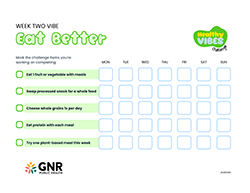
Tracking your progress will help you see how far you’ve come!
- Download the Week Two Tracker
- Mark the challenge items that you want to try.
- When you complete the item for the day, check off the item under the day you completed it.
Tips:
Print the tracker on a printer or open the file on your phone or tablet to mark it electronically.
Remember, choose a few items that you think you can complete – there’s no need to try to do them all.
Enlist a friend to do the challenge with you. If you have a hard time, doing things like this alone a friend can help. Ask them to sign up!
Week Three Vibe
coming january 26
Why this week's vibe is important
Available on January 26, 2026, by noon.
Challenge Items
Available on January 26, 2026, by noon.
This week's tracker download
Available on January 26, 2026, by noon.
Week Three Vibe
Proportion meals
Step One: Learn why this week's vibe is important
People with healthy eating patterns live longer and are at lower risk for serious health problems such as heart disease, type 2 diabetes, and obesity. For people with chronic diseases, healthy eating can help manage conditions and prevent complications.
According to the Dietary Guidelines for Americans 2020–2025 a healthy eating plan:
- Emphasizes fruits, vegetables, whole grains, and fat-free or low-fat milk and milk products.
- Includes a variety of protein foods. Healthful options include seafood, lean meats and poultry, eggs, legumes (beans and peas), soy products, nuts, and seeds.
- Is low in added sugars, sodium (salt), saturated fats, trans fats, and cholesterol.
- Stays within your daily calorie needs
- USDA’s MyPlate Plan can identify what to eat, how much to eat from the different food groups, and how to stay within your recommended calorie allowance. My Food Diary can help you track meals and snacks.
- Fruit – Fresh, frozen, or canned fruits are great choices. Try fruits beyond apples and bananas, such as mangos, pineapples, or kiwis. When fresh fruit is not in season, try a frozen, canned, or dried variety. Be aware that dried and canned fruit may contain added sugars or syrups. Choose canned varieties of fruit packed in water or in its own juice.
- Vegetables – Fresh, frozen, or canned fruits are great choices. Try fruits beyond apples and bananas, such as mangos, pineapples, or kiwis. When fresh fruit is not in season, try a frozen, canned, or dried variety. Be aware that dried and canned fruit may contain added sugars or syrups. Choose canned varieties of fruit packed in water or in its own juice.
- Calcium-rich foods – In addition to fat-free and low-fat milk, consider low-fat and fat-free yogurts without added sugars. These come in a variety of flavors and can be a great dessert substitute.
- Meats – If your favorite recipe calls for frying fish or breading chicken, try healthier variations by baking or grilling. Maybe even try dry beans in place of meat. Ask friends or search the internet and magazines for recipes with fewer calories. You might be surprised to find you have a new favorite dish!
- Comfort food – You can still enjoy your favorite foods, even if they are high in calories, fat, or added sugars. The key is eating them only once in a while.
-Eat them less often. If you normally eat these foods every day, cut back to once a week or once a month.
-Eat smaller amounts. If your favorite higher-calorie food is a chocolate bar, have a smaller size or only half a bar.
-Try a lower-calorie version. Use lower-calorie ingredients or prepare food different
Step Two: Choose your challenges for the week
This week, you’ll learn balanced eating using the MyPlate framework.
Daily Action Items
Choose 3–5 to use throughout the week.
Be sure to read “Why it matters” to understand why making these small changes can help make a difference.
- Use the “½ plate fruits/veggies, ¼ plate protein, ¼ plate grains” method for one meal.
Why it matters: Encourages balanced energy and nutrient intake. - Focus on portion awareness — use smaller plates or bowls for meals.
Why it matters: Can reduce overeating by 20–30%. - Plan one balanced lunch ahead of time.
Why it matters: Makes healthy eating convenient and stress-free. - Check nutrition labels on one item each day.
Why it matters: Helps individuals understand sugar, salt, and fat levels. - Include a healthy snack prepared the night before.
Why it matters: Prevents last-minute unhealthy choices.
Next, download this week’s tracker below.
Step Three: Track your progress
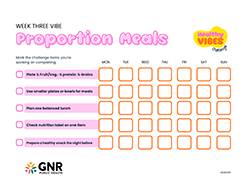
It’s time to track week three! Build on your new skills, too! Go back to weeks one and twoto download those trackers, as well.
- Download the Week Three Tracker
- Mark the challenge items that you want to try.
- When you complete the item for the day, check off the item under the day you completed it.
Tips:
Print the tracker on a printer or open the file on your phone or tablet to mark it electronically.
Remember, choose a few items that you think you can complete – there’s no need to try to do them all.
Enlist a friend to do the challenge with you. If you have a hard time, doing things like this alone a friend can help. Ask them to sign up!
Week Four Vibe
coming February 2
Why this week's vibe is important
Available on February 2, 2026, by noon.
Challenge Items
Available on February 2, 2026, by noon.
This week's tracker download
Available on February 2, 2026, by noon.
Week Four Vibe
Increase activity
Step One: Why increasing activity is important
Increasing your physical activity provides immediate and long-term benefits, acording to the CDC.
Some of those benefits include:
- Some benefits of physical activity for brain health happen right after a session of
moderate-to-vigorous physical activity. Benefits include improved thinking or
cognition for children 6 to 13 and reduced short-term feelings of anxiety for
adults. Regular physical activity can help keep your thinking, learning, and
judgment skills sharp as you age. It can also reduce your risk of depression and
anxiety, protection of bones, joints, and muscles to be able to perform daily
activities and prevent injury as you age and help you sleep better - Both eating patterns and physical activity routines play critical roles in weight
management. You can gain weight when you consume more calories than the
amount of calories you burn. - Reduce health risks such as cardiovascular disease, infectious disease, type 2
diabetes and common cancer such as colon, breast, stomach, bladder, and kidney.
Read more
Step Two: Choose your challenges!
The week, you’ll work on reducing sedentary behavior and increasing daily movement.
Choose two to three of the following to practice this week:
- Take a 10–15 minute walk during lunch or break.
Why it matters: Boosts energy, reduces stress, and improves cardiovascular health. - Limit screen time after work by 30 minutes one day.
Why it matters: Supports mental health and better sleep. - Stretch for 5–10 minutes after waking or before bed.
Why it matters: Improves flexibility and reduces muscle tension. - Use the 20/20/20 rule: every 20 minutes, look away from screens for 20 seconds, 20 feet away.
Why it matters: Reduces eye strain and improves focus. - Do one body-weight exercise (squats, wall sits, pushups) daily.
Why it matters: Builds strength without needing equipment.
Step Three: Download this week's tracker
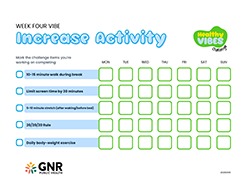
The time has come to track week four!
- Download the Week Four Tracker
- Mark the challenge items that you want to try.
- When you complete the item for the day, check off the item under the day you completed it.
Tips:
Print the tracker on a printer or open the file on your phone or tablet to mark it electronically.
Remember, choose a few items that you think you can complete – there’s no need to try to do them all.
Enlist a friend to do the challenge with you. If you have a hard time, doing things like this alone a friend can help. Ask them to sign up!
Week Five Vibe
coming February 9
Why this week's vibe is important
Available on February 9, 2026, by noon.
Challenge Items
Available on February 9, 2026, by noon.
This week's tracker download
Available on February 9, 2026, by noon.
Week Five Vibe
reduce risks
Step One: Why reducing your risk for chronic disease is important
There are additional things you should do to help limit your risk for chronic disease.
Stop Smoking or Don’t Start
Lowers the risk of serious health problems, such as heart disease, cancer, type 2 diabetes, and lung disease, as well as premature death—even for longtime smokers. If you’re a smoker, take the first step and call the GA Tobacco Quite Line (877) 270-STOP (877-270-7867), Español (877) 2NO-FUME (877-266-3863)m Hearing Impaired: 1-877-777-6534 or Text READY to 34191, Español Text LISTO to 34191. You may also enroll online at QuitNow.net. The quit line is available 24 hours a day, 7 days a week (including holidays).
Limit Alcohol Intake
Over time, excessive drinking can lead to high blood pressure, various cancers, heart disease, stroke, and liver disease. By not drinking too much, you can reduce these health risks.
Eat Healthy
Eating healthy helps prevent, delay, and manage heart disease, type 2 diabetes, and other chronic diseases. A balanced, healthy dietary pattern includes a variety of fruits, vegetables, whole grains, lean protein, and low-fat dairy products and limits added sugars, saturated fats, and sodium.
Get Enough Sleep
Insufficient sleep has been linked to the development and poor management of diabetes, heart disease, obesity, and depression. Adults should get at least 7 hours of sleep daily.
Get Screened
To prevent chronic diseases or catch them early, visit your doctor and dentist regularly for preventive services.
Take Care of Your Teeth
Oral diseases—which range from cavities and gum disease to oral cancer—cause pain and disability for millions of Americans. To help prevent these problems, drink fluoridated water, brush with fluoride toothpaste twice a day, and floss daily. Visit your dentist at least once a year, even if you have no natural teeth or have dentures.
Step Two: Choose Your Challenges!
Choose this week’s challenges!
- Replace one smoking break with a quick walk or breathing exercise.
Why it matters: Helps interrupt the habit loop and reduces nicotine dependence.
Read more at Smokefree.gov - Practice a 3-minute breathing or mindfulness exercise.
Why it matters: Stress reduction lowers the urge to smoke and supports heart health. - Reduce alcohol consumption for one day (or track intake).
Why it matters: Reduces cancer and heart disease risk.
Read more at CDC - Check your blood pressure once this week (at a pharmacy or using a cuff).
Why it matters: Hypertension is a silent risk factor for stroke and heart disease. - Add one anti-inflammatory food to your diet (berries, leafy greens, salmon, nuts).
Why it matters: Supports heart and metabolic health.
Step Three: Download This Week's Tracker
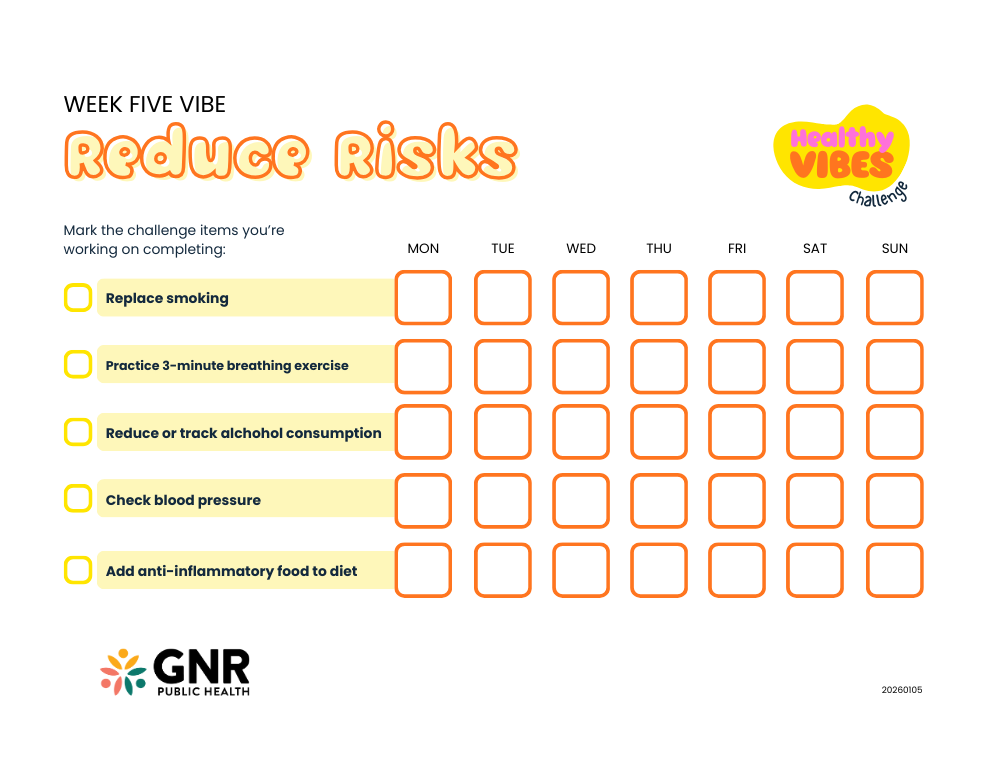
The time has come to track week four!
- Download the Week Five Tracker
- Mark the challenge items that you want to try.
- When you complete the item for the day, check off the item under the day you completed it.
Tips:
Print the tracker on a printer or open the file on your phone or tablet to mark it electronically.
Remember, choose a few items that you think you can complete – there’s no need to try to do them all.
Enlist a friend to do the challenge with you. If you have a hard time, doing things like this alone a friend can help. Ask them to sign up!
Pulling it all together
What now?
Keep those healthy vibes going!
Revisit each week’s challenges. Were there any you didn’t try? Try them now! Keep building on what you learned.
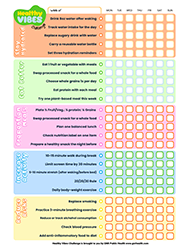
We’ve even created a challenge tracker with every single challenge from the past five weeks for you to use. Download it now!
Individuals who signed up for the challenge: Check your email for a special surprise!